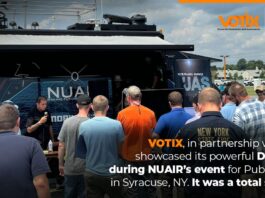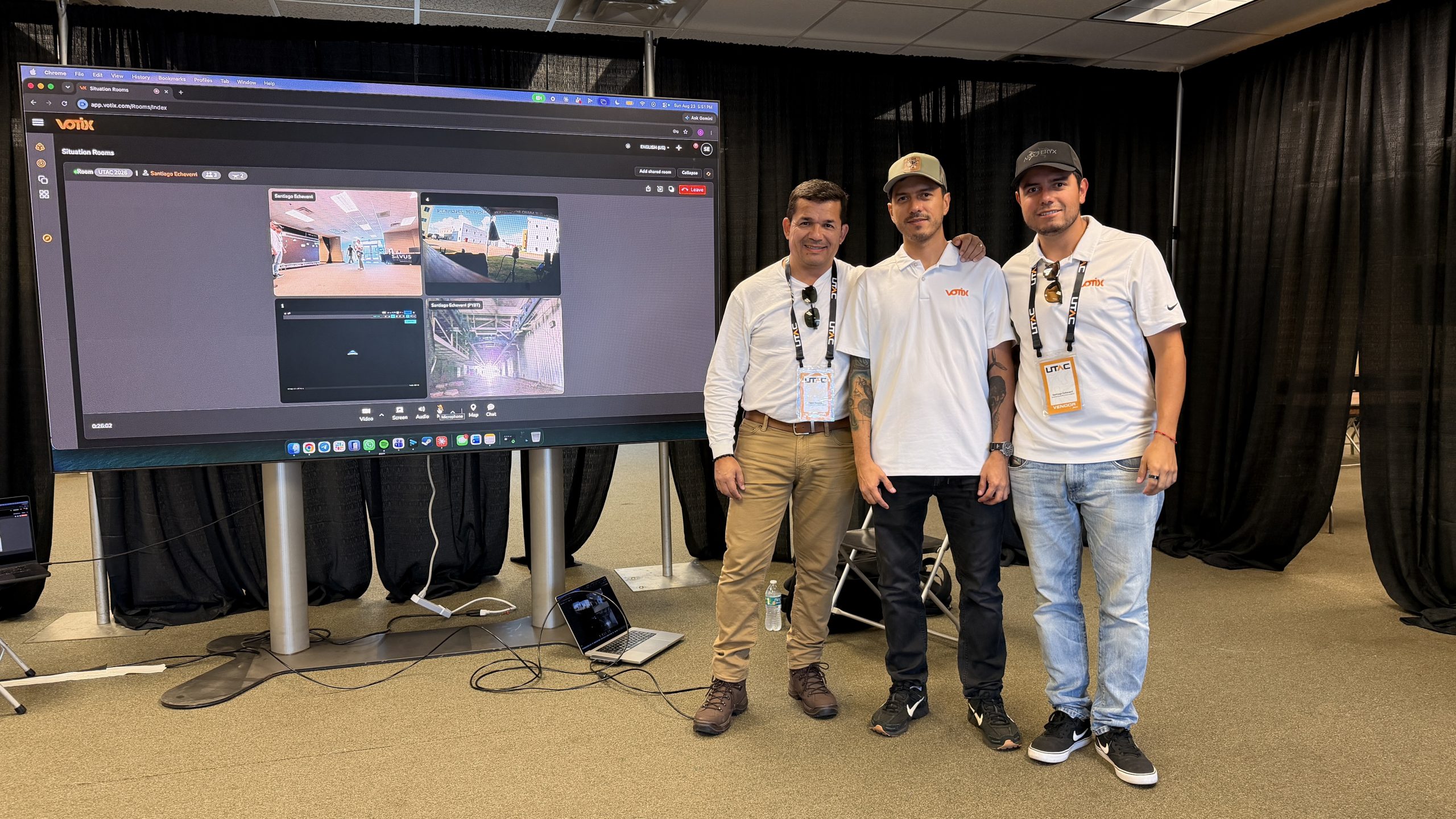
VOTIX joined the Unmanned Tactical Application Conference as a Gold Sponsor, and as the platform carrying the event’s operational scenarios. Here’s what we showed in Perry, Georgia, and why it mattered for the agencies in the room.
We were pleased to share that VOTIX was a Gold Sponsor of UTAC 2026 in Perry, Georgia, held August 24 to 26.
Alongside the sponsorship, something we were prouder of: VOTIX Situation Rooms was the official platform running the conference’s operational scenarios this year. It ran the exercises directly, integrated into every scenario from start to finish.
We wanted to explain what that meant in practice, what we showed, and why we thought it was worth an hour of your time whether you attended or were simply interested in learning more.
What “the platform running the scenarios” actually means
UTAC is built around live operational scenarios, the kind of multi-team, multi-discipline exercises that reveal how technology performs under real operating conditions.
This year, those scenarios ran on VOTIX Situation Rooms. Live video and telemetry from drones, ground robots, mobile devices and remote locations flowed into a single shared operating layer, and every participating team worked from that same picture at the same moment.
This was what mattered most to us: carrying three days of live exercises in front of the professionals who would have to trust this platform on a real call. That is the standard we stand behind, and the one we welcome being judged on.
We were grateful to the UTAC team for the trust, and we set out to earn it.
What we showed: Situation Rooms
Situation Rooms is VOTIX’s real-time command and control environment for public safety, law enforcement and emergency management. At UTAC, attendees saw it doing the work it was designed for:
- One operating layer, shared across agencies. Every responding team sees the same live picture, including positions, feeds, tasking and status, updated automatically as the incident unfolds.
- Every sensor in one place. Drone video, ground robot feeds, mobile devices in the field and remote camera sources come together in a single environment, giving every team one consistent place to work from.
- Tasking and area de-confliction. Assign areas and tasks from one board, and see at a glance which ground has been covered, giving every team confidence that the search area has been addressed thoroughly.
- An incident record that builds itself. The timeline assembles as the incident unfolds, so after-action review, reporting and grant documentation become a simple matter of export.
- Designed to sit alongside what you already own. Situation Rooms functions as a shared layer above your existing CAD and RMS systems, working with the investments your agency has already made, so your team keeps the systems it trusts today.

Where and when to find us in Perry
We ran the scenarios every day from 11:00 am to 12:00 pm, and two sessions, both in the EOC building, and we deliberately made them different from one another.
Tech Trial: Tuesday, August 25, 2:00 pm to 3:00 pm
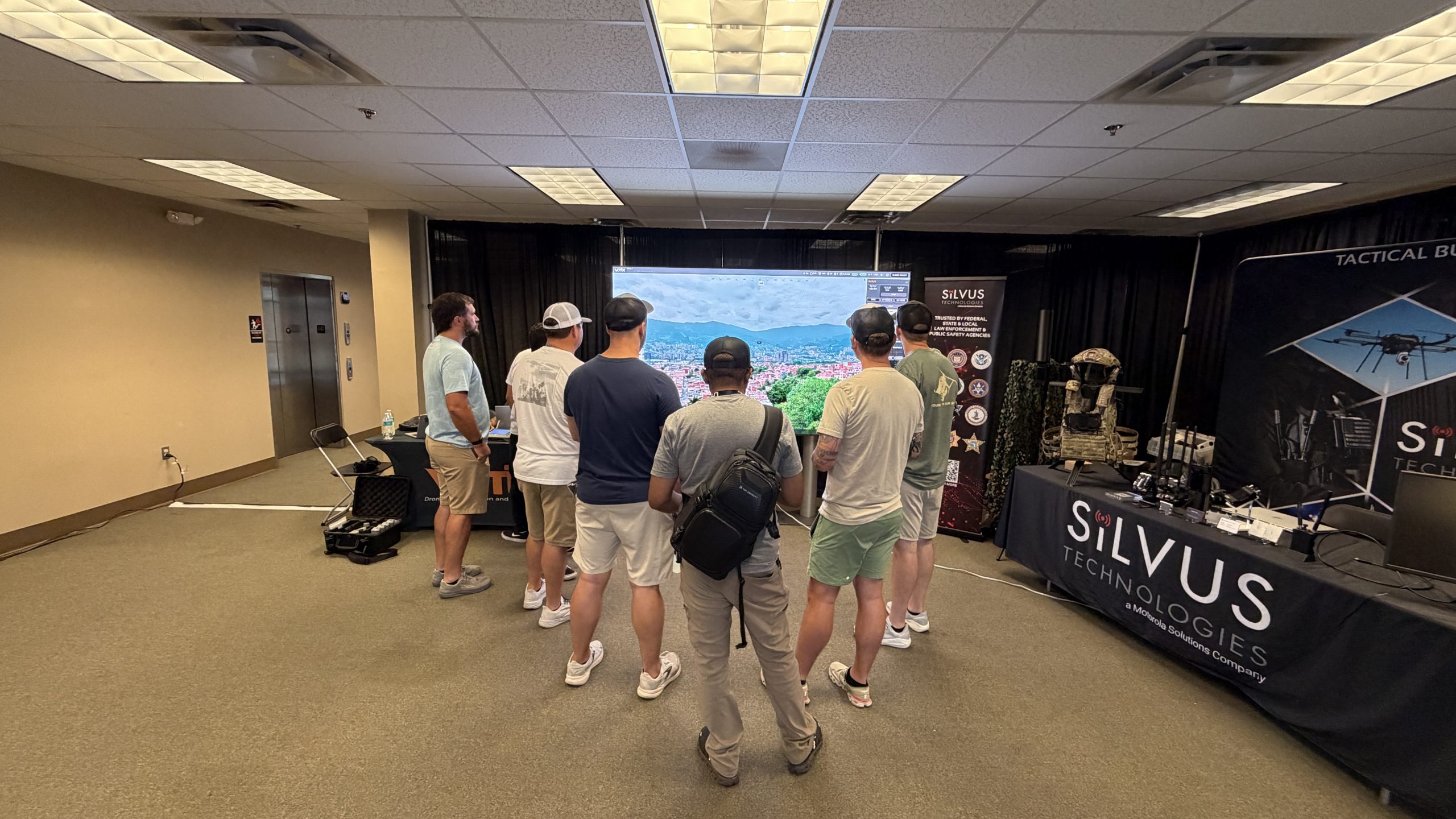
The Tech Trial was where attendees saw the platform work. We walked through the capabilities, ran a live demonstration, and then opened the floor to questions, covering the platform, how it handles specific situations attendees had faced, and anything they wanted to press on.
If you wanted to understand what Situation Rooms is and watch it operate, this was the session.
Workshop: Wednesday, August 26, 1:30 pm to 2:30 pm
The Workshop was hands-on, and it was built around three questions agencies actually ask us:
- How quickly can we be productive? What it takes to get an agency up and running, across Situation Rooms, mission management and flight operations.
- What does this look like for our use cases? Rapid reaction, crime scene management, situation room assistance, and inspection and mission planning, shown as workflows that map directly to how your team operates.
- How does this compare with how we do it today? An honest side by side of common workflows in VOTIX against the tools many agencies are already using.
This one was interactive by design. Attendees brought their questions, and those who wanted to see it working on their own equipment brought their own drones.
We were also at our booth #10 throughout the week.
Why this matters for public safety organizations
Across the agencies we work with, we see an encouraging pattern worth pointing out: most have already built genuine operational capability, with aircraft in the fleet, trained and certified operators, and procedures that hold up under pressure. That investment deserves recognition, and it is a foundation worth building on as you think through what comes next.
The opportunity ahead is building one picture that holds together, the moment a second agency arrives on scene.
That moment matters most, because it is where the greatest opportunity for improvement lies. The first agency has already built a clear picture of what is happening and sharing that same picture with the second agency the instant they arrive turns what used to be a verbal handoff into an immediate shared advantage, freeing everyone on scene to focus on the incident rather than repeating details.
It is a coordination challenge, and it responds well to the right kind of shared visibility.
The good news is that closing it takes only a shared layer both agencies can see and agreement on a few conventions before the call comes in, building on the systems you already have in place. You can start on some of that next week at no cost, and we are glad to guide you through the pieces that live outside our platform too.
Why consider VOTIX
We want to make this easy for you to evaluate on your own terms.
Every UTAC attendee can run the full platform free during the event. We want you to hold it against a real incident, a real exercise or a real mutual aid call. That’s the only test that tells you anything.
Start small. The programs we see succeed focus on one incident type and one partner agency, usually the one you end up alongside most often, and run it for thirty days. Prove it on something modest before taking it to a budget conversation.
Ask us the hard questions, including how the platform handles your specific situation, what conditions call for extra planning, and where the roadmap is headed next. We aim to give you a straight answer at the conference, so you have full clarity on the platform going in.
Those who attended UTAC 2026 found us at the Tech Trial, at the Workshop, or at the booth. If you missed it, the free trial is still open.
We welcome you to test the platform for yourself and judge based on what you experience.