

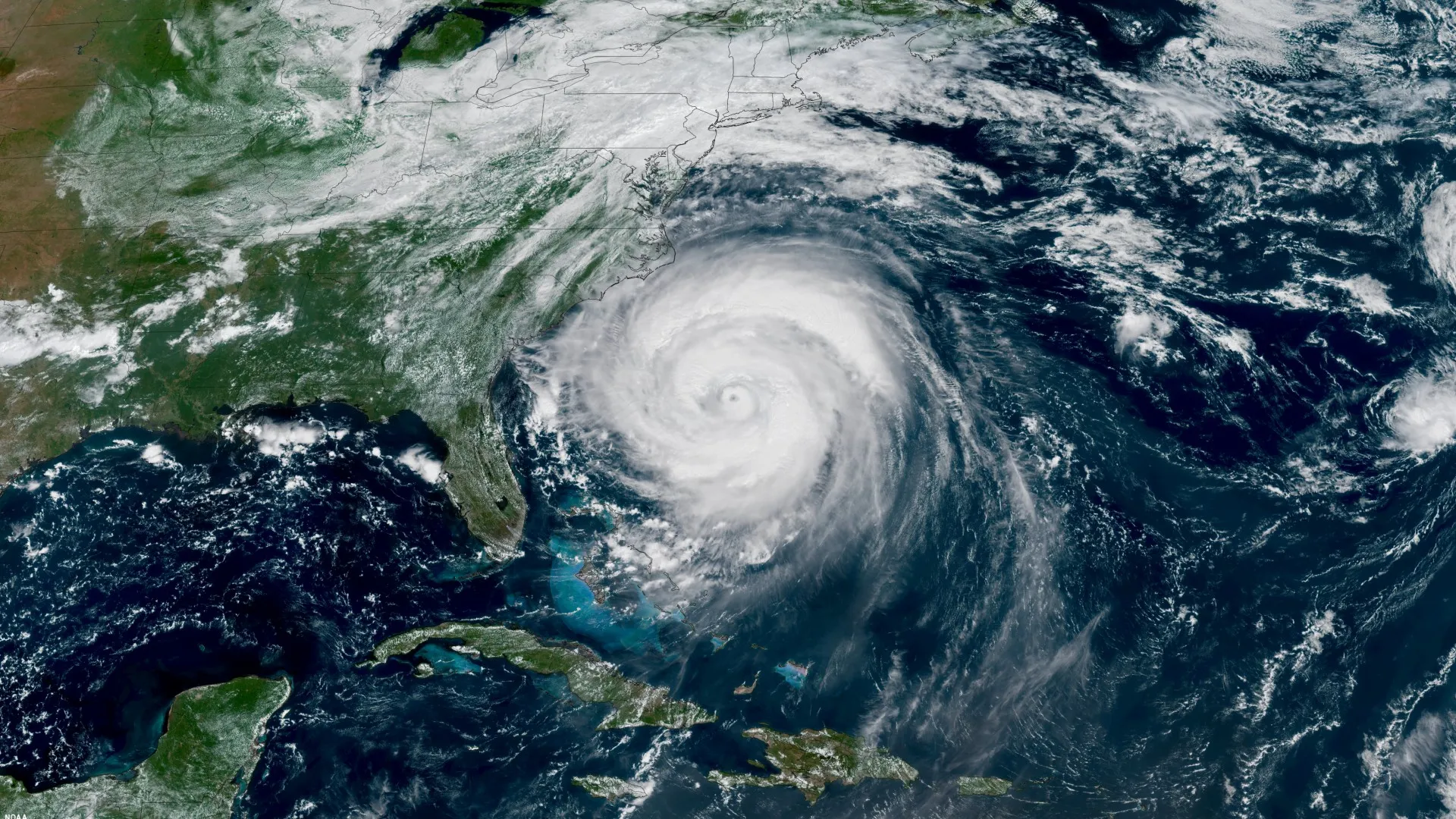
Hurricane season have began. For most public safety agencies with drone programs, that date passes without a second thought. Equipment is checked, batteries are charged, and operators are on standby. But “standby” is not the same as ready. And in a Category 3 hurricane, the difference between the two is measured in lives.
In 2024, 11 named storms made landfall in the United States. Climate data shows that active seasons are no longer the exception, they are the baseline. Agencies that operated drone programs during Debby, Helene, and Milton reported a consistent finding: the technology worked. The operations did not.
The Equipment Gap vs. The Operations Gap
Most agencies invest in hardware. They buy good drones, they train operators to fly but operational readiness, the ability to deploy, coordinate, and command a drone program under real disaster conditions, requires something hardware alone cannot provide.
The three most common operational failures during 2024 hurricane responses were:
- Activation delays: Agencies averaged 47 minutes from disaster declaration to first drone airborne, not because the drones weren’t ready, but because command infrastructure wasn’t pre-configured.
- Communication breakdown: EOC personnel watched drone feeds on separate screens with 3–5 second latency. By the time they radioed coordinates to ground units, the subject had moved. False positives overwhelmed the system.
- Multi-agency coordination failure: When mutual aid activated, neighboring agencies couldn’t access shared airspace pictures. Each agency operated its own siloed view of the same disaster.
What Operational Readiness Actually Looks Like
Operational readiness is not a static checklist. It is a live, configured system that activates the moment you need it. For drone programs, it means:
- Sub-250ms video streaming to your EOC -Emergency Operations Center – not 3-second-delayed guesswork
- Pre-authorized Situation Room access for mutual aid partners, FEMA liaisons, and state EM coordinators
- Pre-loaded geofence profiles for flood zones, evacuation corridors, and restricted airspace
- Automated incident reporting in ICS-209 format because documentation doesn’t stop during a disaster
- AI Smart Follow active on thermal feeds so your operators find survivors faster with less cognitive load
The 5-Phase Disaster Readiness Framework
VOTIX has worked with public safety drone programs across the United States to develop a five-phase disaster readiness framework: Pre-Season Preparation, Activation Protocol, Active Operations, Stand-Down & Recovery, and After-Action Review. Each phase has specific actions, platform configurations, and personnel requirements.
The framework is documented in full in the VOTIX Drone Program Disaster Readiness Playbook a free, 14-page operational guide developed specifically for DFR agencies preparing for the 2026 hurricane season.
Three Questions to Ask inside your Team
- If your UAS Coordinator is incapacitated during an incident, can the backup operator activate your Situation Room and establish EOC streaming within 15 minutes?
- Do your mutual aid partner agencies have pre-authorized, time-limited access to your VOTIX stream without requiring a phone call to set it up during the incident?
- When was the last time you ran a 15-minute launch drill with a post-drill debrief?
If you hesitated on any of those questions, you have pre-season work to do.
READY TO FIND OUT WHERE YOUR PROGRAM STANDS?
Download the VOTIX Drone Program Disaster Readiness Playbook, free for all US public safety agencies.
votix.com/disaster-readiness-playbook